
Fruits and vegetables are the keys to good health—- they are rich in vitamins, minerals, fiber, and phytonutrients. Storage and preparation methods, like chopping and cooking, can impact the nutrient content in fruits and vegetables. Minerals tend to be less sensitive to preparation methods, but water-soluble vitamins, such as vitamin C and several B vitamins (folate, thiamin, B6), are sensitive to heat and water— they are easily destroyed by cooking methods. Niacin, a B vitamin found in mushrooms, potatoes, and tomatoes, and Riboflavin, a B vitamin found in broccoli, asparagus, and green, leafy veggies, are actually different than the rest of the B vitamins— they are fairly-heat resistant and less affected by cooking methods. Vitamin C is not only sensitive to cooking methods, but it can also be easily destroyed by oxygen— covering fruits and vegetables in air-tight containers after chopping is important to help retain Vitamin C content.
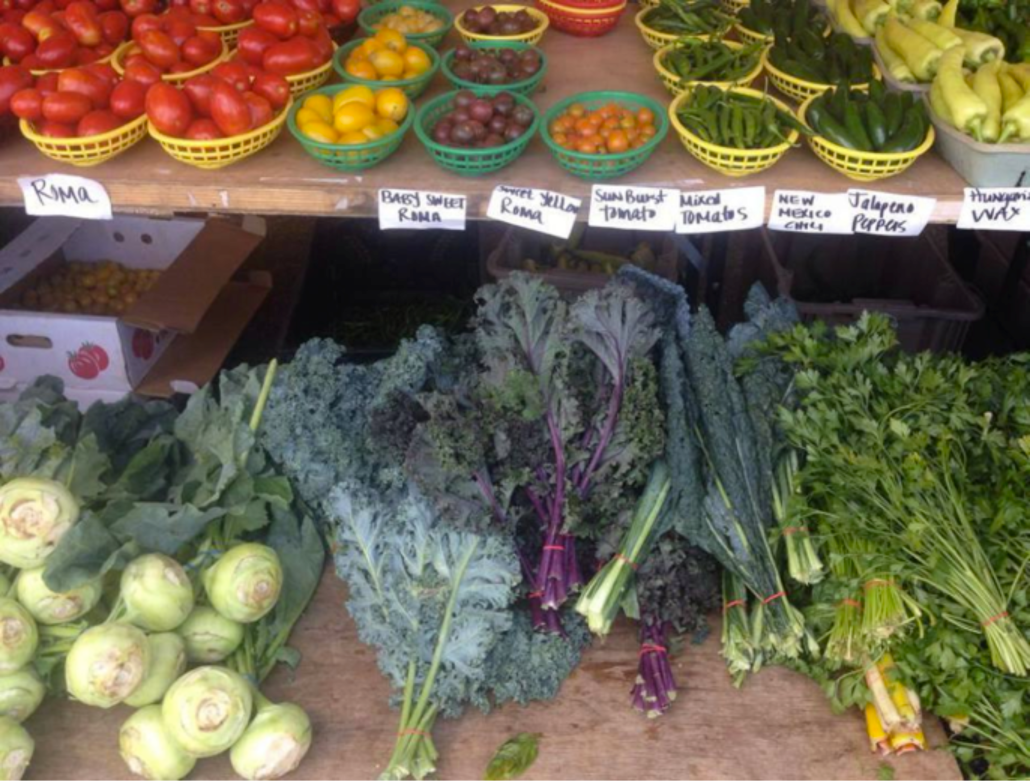
To further prevent loss of vitamins from foods:
1.Keep most fruits and vegetables in the fridge to slow the loss of vitamins (see this tip sheet for specifics on best storage). Fresher vegetables and fruits—ones that haven’t been on the store shelf forever— and sometimes frozen fruits and vegetables will naturally have a higher vitamin content (see here and here) . Frozen blueberries are a staple in my diet!
- Wash fruits and vegetables prior to cutting and serving rather than pre-washing and storing.* If pre-washing and cutting helps you to eat more fruits/ vegetables throughout the week— then ignore this!! Eating fruits and vegetables, even it means losing some nutrients is more important than not eating them at all!
- With direct contact to water, vitamins will leach into water. Cook with less water— unless it’s a soup or if you plan to use the vegetable water for a sauce or stew. The best methods for cooking vegetables is to lightly steam them or bake them on low heat. Avoid over cooking vegetables.
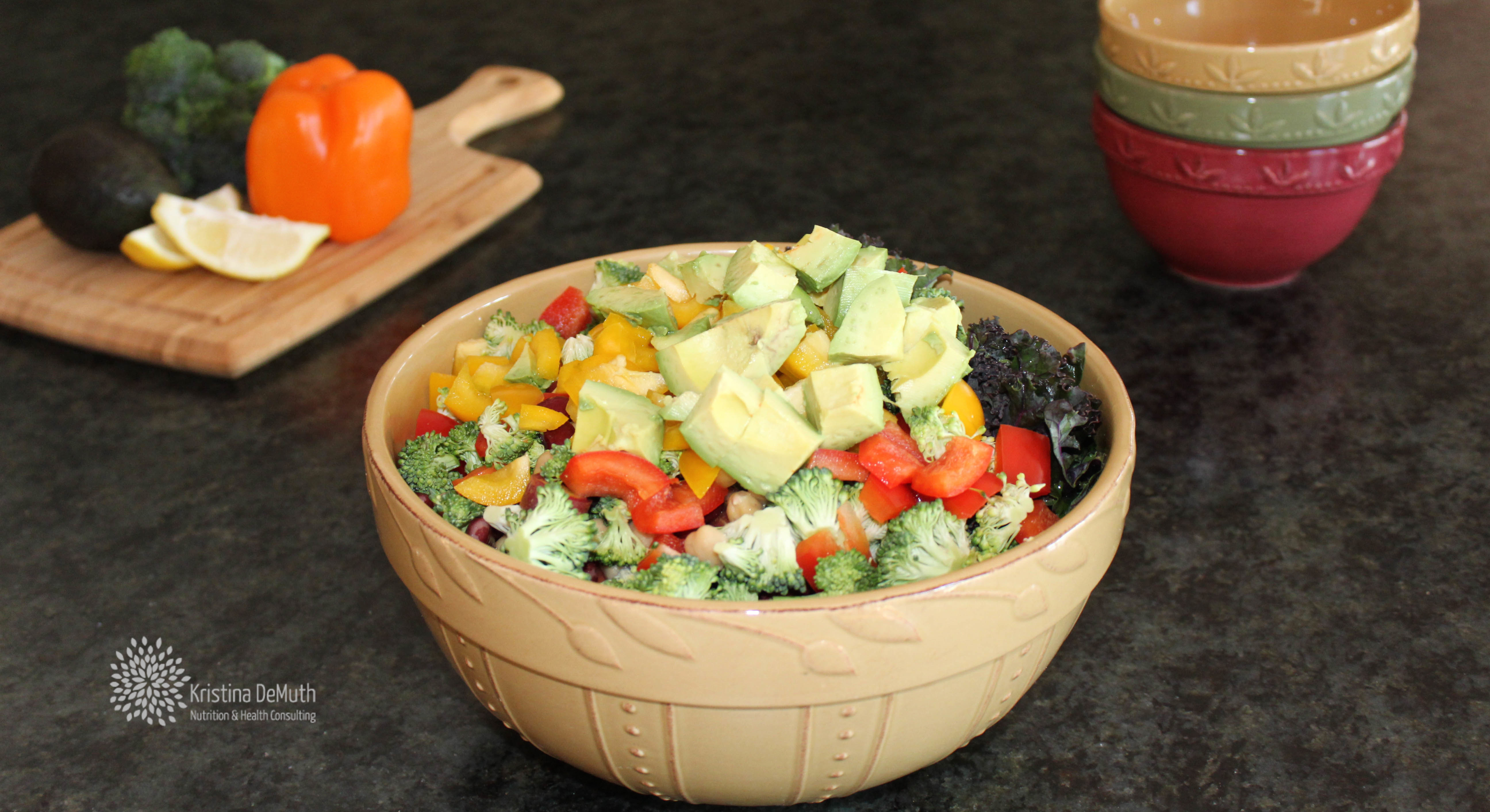
While some nutrients are destroyed or lost during preparation and various cooking methods, other nutrients become more absorbable or actually increase in their nutritional properties. Carotenoids— phytochemicals found in yellow, orange, and red fruits/ vegetables, as well as green leafy vegetables — have variable impacts with cooking methods. Chopping, blending, and cooking helps to increase absorption of some of the carotenoids. Take for instance, Lycopene—a cancer fighting, carotenoid found in tomatoes— the lycopene increases 4 x the content when cooked vs. raw. Further, adding healthy fats (e.g. avocados, nut butters, seeds) to your meal can help increase the absorption of carotenoids in fruits/ vegetables. There are more ways to increase the bioavailability (how much your body absorbs) of various nutrients in plant-based foods, such as pairing Vitamin C rich foods (e.g. leafy greens, tomatoes, bell peppers, strawberries, citrus fruits, avocado, squash, broccoli) with plant-based foods rich in non-heme iron (e.g. beans/ lentils, whole grains, nuts, seeds).
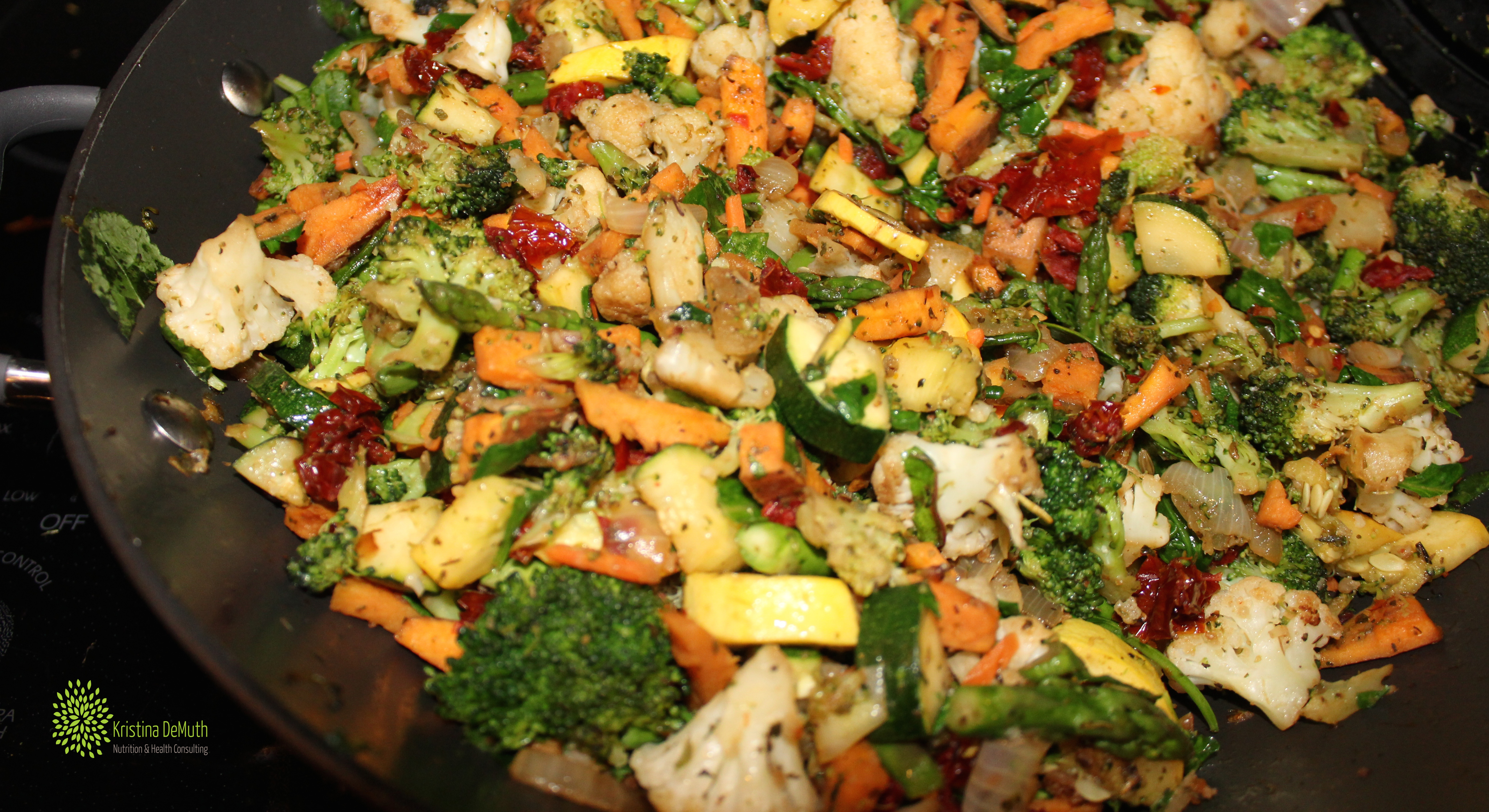
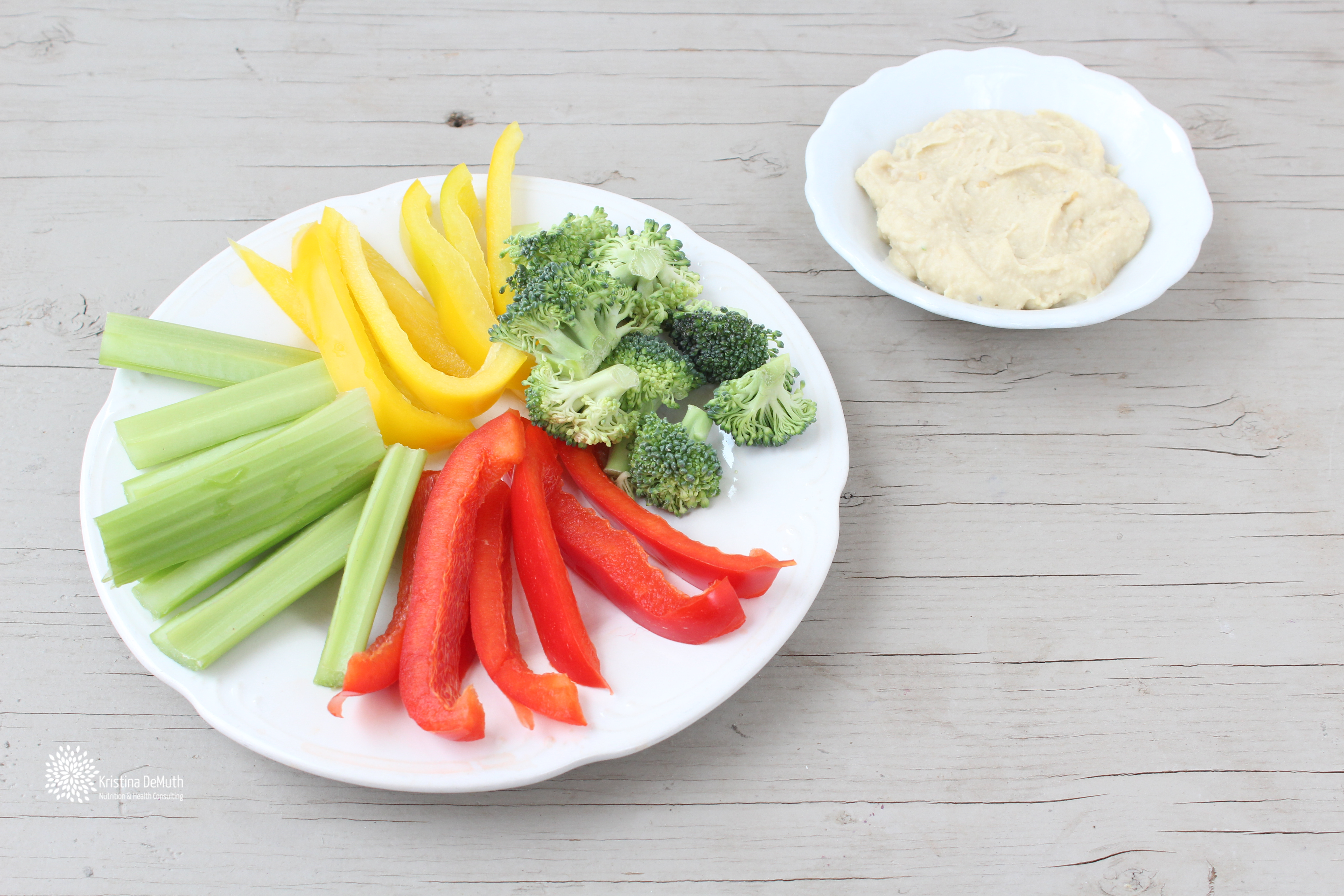
There is some evidence that suggests both raw and cooked veggies are protective against chronic diseases, such as heart diseases. So the best thing to do—-mix it up! Eat a variety of cooked and raw fruits and vegetables.
If it is already a struggle for you to eat enough fruits and vegetables, find a method of preparation that you like (Berkeley has tips for 60+ ways to cook veggies) . For example, if you aren’t a fan of raw carrots and you prefer them roasted—-roast your carrots. Eat your vegetables in a way that you prefer and then gradually start to work on eating them in a variety of new ways. I didn’t always like broccoli and carrots. It took a few preparation methods, such as roasting and sautéing, for me to start eating them. As I began to enjoy broccoli and carrots in one state, I found that I started to enjoy them in nearly all methods of preparation! Tastes evolve and as you continue to expose yourself to healthier foods— you just learn to like them, enjoy them, and even crave them!
A few additional resources to check-out:
Click here to add your own text

Click here to add your own text